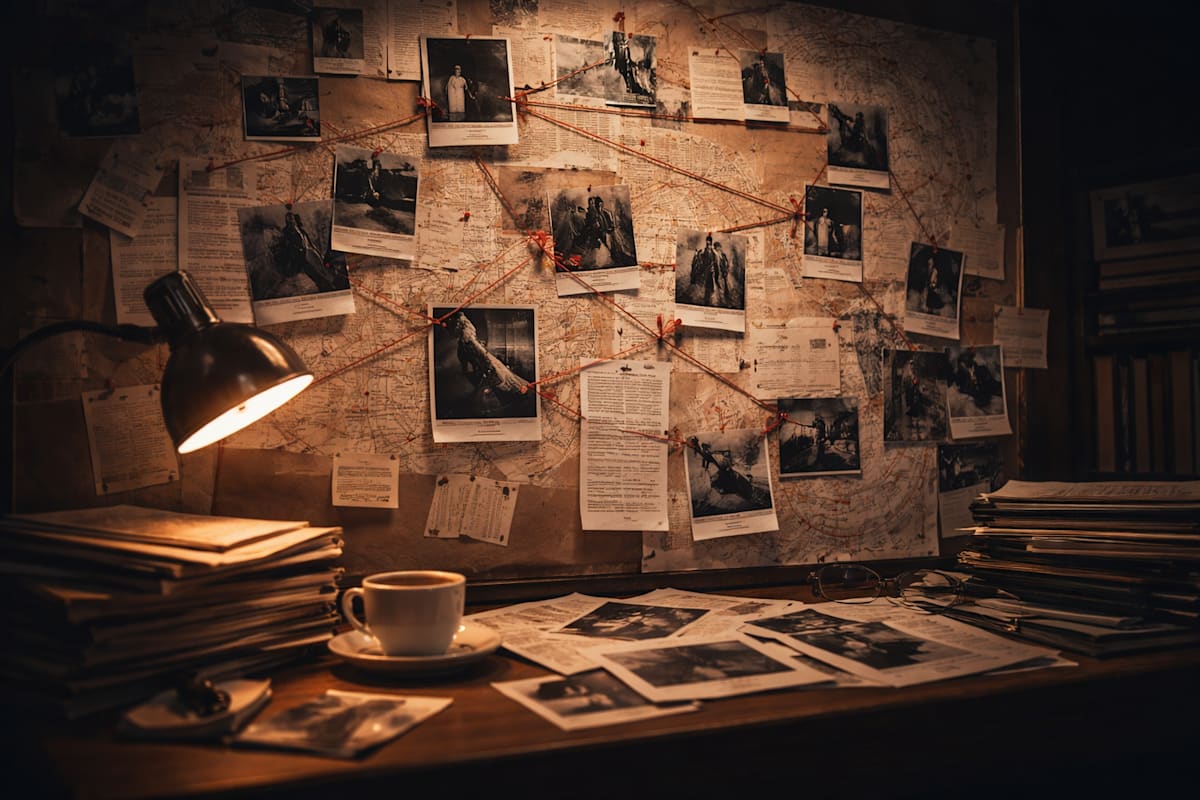
There’s something about an unsolved case that refuses to let go of the human mind.
A closed case gives us relief. A solved mystery restores order to the world. But an unsolved case does the opposite—it lingers. It sits in the back of our thoughts like a door left slightly open.
And that open door is where many of my stories begin.
As a writer of psychological thrillers, I’m fascinated by the intersection of memory, justice, and the human need for answers. Real life is full of questions that never receive clean conclusions. Thousands of cold cases across the United States remain unresolved, each one representing a life interrupted and a story left unfinished.
For investigators, those cases can become lifelong puzzles. For families, they become something even heavier—a constant search for closure.
For writers, they become a reminder that truth is rarely simple.
The Psychology of Unfinished Stories
Psychologists call it the Zeigarnik Effect—the tendency for people to remember unfinished tasks better than completed ones. In other words, our brains are wired to hold on to unresolved problems.
That’s why unsolved mysteries feel so powerful.
When we encounter an unanswered question—especially one tied to a human story—our minds keep circling back. We replay the possibilities. We analyze the clues. We imagine the missing piece that could finally make everything make sense.
That same psychological pull is what drives many great thrillers.
Readers aren’t just looking for danger or suspense. They’re searching for the moment when chaos finally resolves into truth.
Memory: The Most Unreliable Witness
Another reason unsolved cases intrigue me is the role of memory.
Memory feels solid, but neuroscience tells a different story. Our recollections change over time. Details shift. Emotions reshape the narrative.
Some people, however, possess an extraordinary ability called hyperthymesia, often described as “perfect autobiographical memory.” They can recall the details of specific days with remarkable clarity.
That idea—the tension between perfect memory and imperfect justice—became a major inspiration behind my thriller writing.
Because if someone could remember everything…
what truths might they uncover?
The Human Side of Cold Cases
True crime stories often focus on the puzzle itself—the suspects, the clues, the timeline.
But what draws me in most is the human side.
Behind every case is a life. Behind every investigation is someone who refuses to stop asking questions.
That determination—the relentless pursuit of truth—is at the heart of the stories I love to write.
My characters may be fictional, but the emotional core of their journeys is very real. The frustration of unanswered questions. The weight of carrying the past. The hope that somewhere, somehow, the truth still exists.
Why Stories About Justice Matter
Thrillers allow us to explore difficult questions about justice in ways real life sometimes cannot.
In fiction, we get to chase the truth to its conclusion.
We get to see the moment when hidden patterns emerge, when secrets unravel, and when the pieces of the puzzle finally lock into place.
It’s not just entertainment.
It’s a reminder that even when answers seem buried, the search itself still matters.
And sometimes, the smallest clue can change everything.
If you enjoy psychological thrillers that explore memory, justice, and the hidden layers of the human mind, you’re exactly the kind of reader I write for.
Because some stories refuse to stay buried.
And some mysteries are worth chasing to the very end